
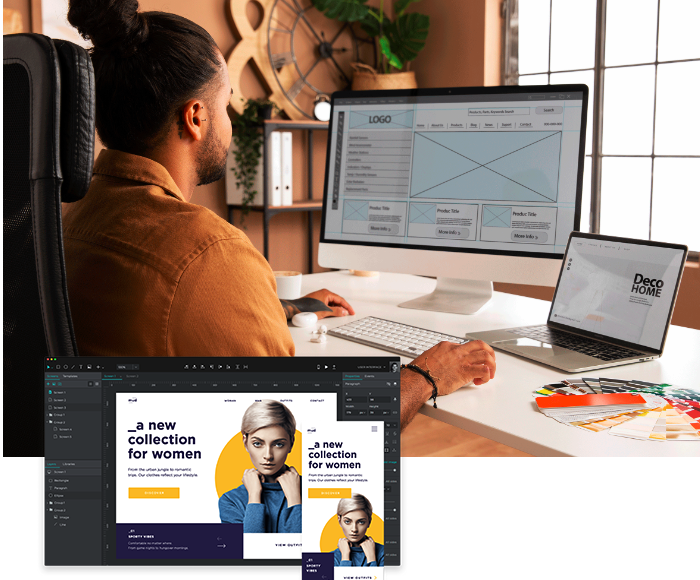
Making Your Website Appealing and Easy to Use
Here's the blunt truth about websites: visitors decide in seconds. If your site is confusing to navigate or ugly to look at, they're gone — usually to a competitor. Keeping them means getting two things right: it has to look good, and it has to work effortlessly.
That starts with understanding your actual audience — what they want, how they browse, what devices they're on. Then the fundamentals: clean structure, fast loading, legible text, images that pull their weight. Interactive elements like buttons and forms keep people engaged, and clear feedback for every action keeps them oriented.
And accessibility isn't an afterthought — designing for users with disabilities makes the experience better for everyone. Get all of this right, and you don't just have a website people tolerate. You have one they genuinely enjoy using — and come back to.
Design and Functionality, Working Together
Our UI/UX design process is a methodical approach to crafting digital products that people find both useful and pleasant. Four essential phases, each building on the last:
Research & Planning
Every good design decision traces back to research. We establish clear objectives, define scope, and understand your users before a single pixel gets placed — so the solution fits real people, not assumptions.
Design & Prototyping
Visual elements and layouts take shape here — a user-friendly interface built screen by screen. Interactive models let you click through the experience and test functionality before development begins.
Testing & Iteration
Real users, real feedback. Usability testing exposes what's confusing, what's slow, and what delights — and we refine the design until the friction is gone. Products improve through iteration, not intuition.
Development & Deployment
The concept becomes a functional product. We ensure consistency between design and build, verify accessibility, and see the interface through to launch — polished and ready for your audience.
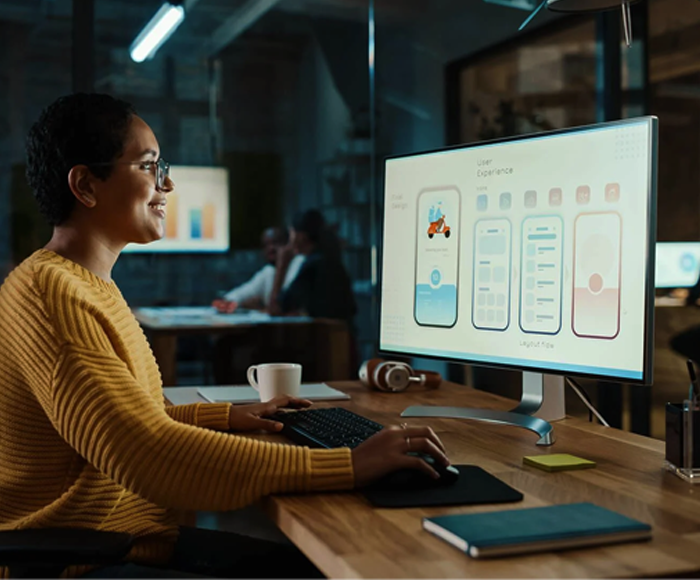
A Smoother, More Cost-Effective Design Journey
Design changes are cheap on paper and brutal in code. A layout tweak during wireframing costs an hour; the same tweak after development starts can cost a week. That's why we hunt for changes early — surfacing requirements, disagreements, and "actually, could we..." moments while they're still sketch-stage decisions.
This early problem-solving is what keeps projects on budget and on schedule. No critical point where alteration costs spiral, no painful reversals, no compromised launches. Adaptability up front buys smooth sailing later — and that discipline is baked into how we work.
Have a Product That Needs Designing?
Book a free discovery session — we'll map out your project's design needs, no commitment required.